Abstraction and Boundaries
Core Idea
Examples and diagrams in this page follow the shared Hypothetical Scenario.
Abstraction and interface are paired ideas. Abstraction defines what a unit promises. An interface is the surface that exposes that promise. Consumers use that surface and skip internal mechanics. Boundaries define where each responsibility starts and ends. Stable boundaries cut accidental coupling across modules.
Boundaries in Practice
A boundary marks the edge of a component. That edge sets ownership for data, behavior, and error handling. Calls that cross the edge pass through explicit contracts. A contract can be an API, trait, event schema, or command line.
Boundaries matter for change control. A team can rewrite internals and keep external behavior stable. Boundaries limit ripple effects across services and modules. Debugging gets faster when fault scope stays narrow. Security review gets sharper when trust zones stay explicit.
Abstraction and boundaries are tightly linked. Abstraction states what a unit means. Boundary states where that meaning applies. A useful abstraction needs a visible boundary. No clear edge leads to hidden coupling and contract drift. Strong boundaries turn abstract ideas into enforceable rules.
Conceptual Overview
A recommendation API is a clear interface. The request and response contract is standardized and predictable. A client app can request ranked listings through that interface. The client does not need scoring engine internals. Marketplace search, cost projection, and AI modules can differ. The interface remains stable across those differences.
A car is another clear example. A driver uses steering, pedals, and signals. Those controls stay familiar across engine types. Gasoline, hybrid, and electric systems can differ deeply. The driver still interacts through one stable interface.
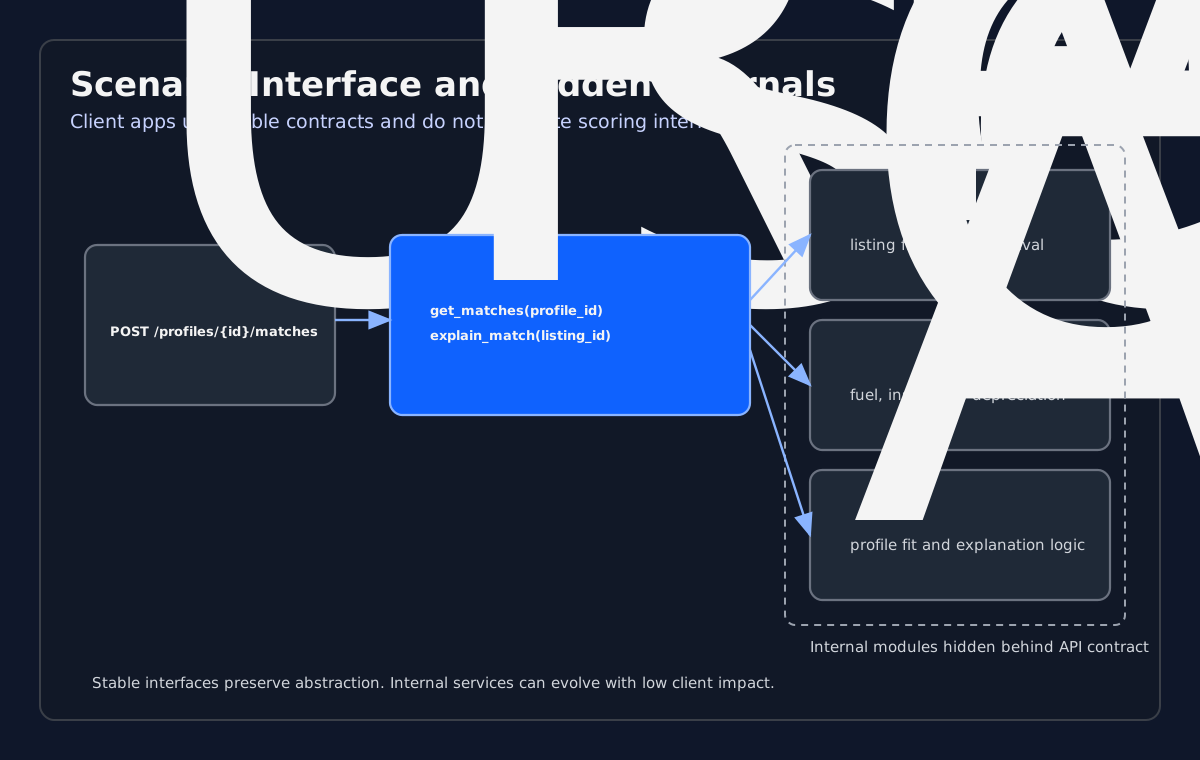
Scenario interface example. Client interaction stays stable. Internal recommendation implementation stays hidden.
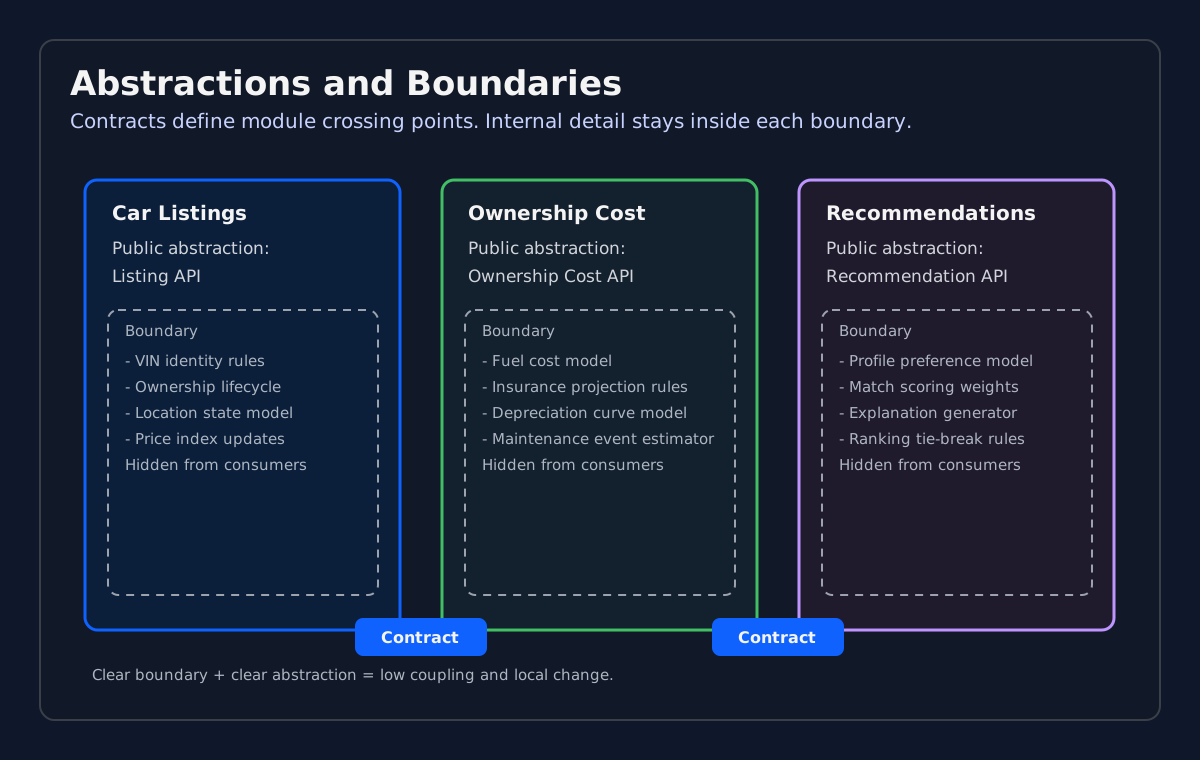
Abstractions and boundaries concept map. Contracts define crossing points between modules. Implementation detail stays inside each boundary.
Computing History
FORTRAN arrived in 1957 and raised programming above raw machine code. ALGOL 60 pushed block structure and lexical scope into daily practice. Smalltalk work in 1972 pushed object boundaries and message passing. Barbara Liskov formalized data abstraction in the 1970s. That work shaped modern interface and type design.
Sources: Wirth (1971), Liskov and Zilles (1974), and Kay (1993)
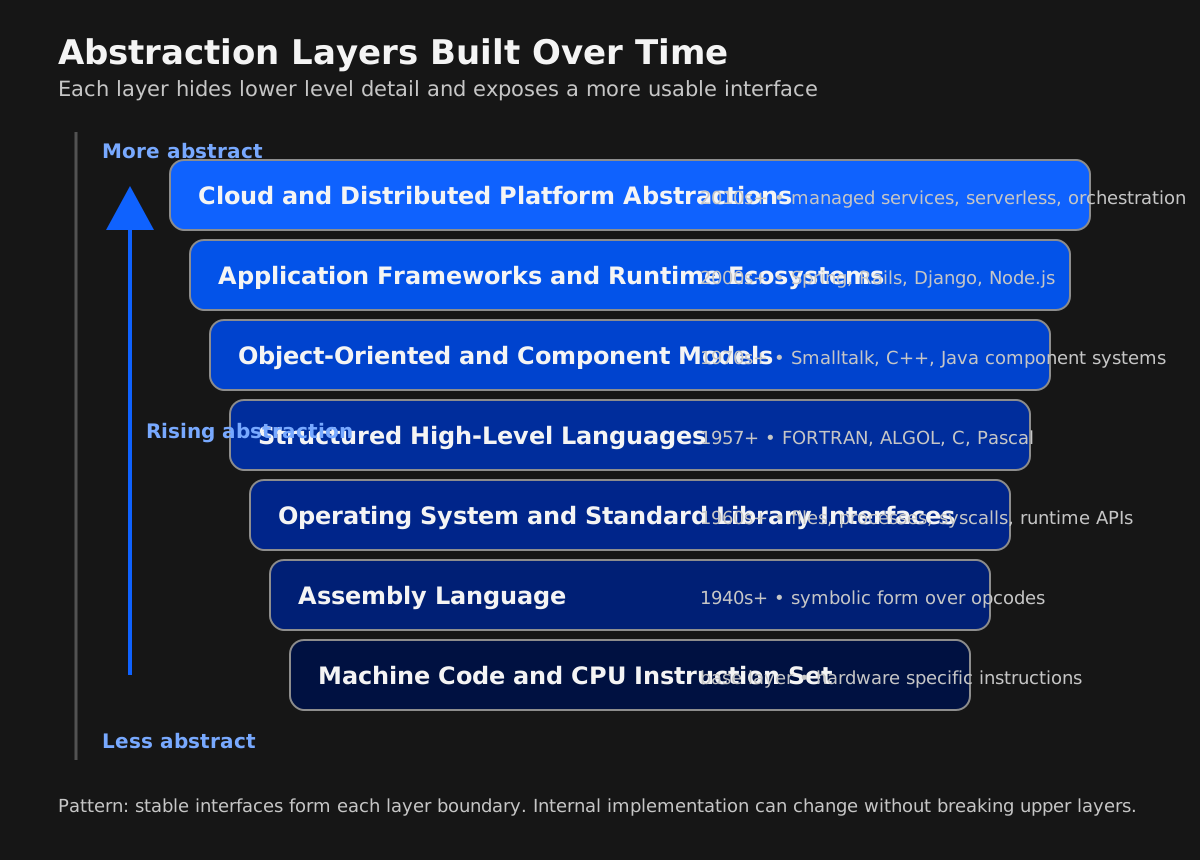
Abstraction layers through computing history. Each layer exposes a stable interface. Each layer hides lower level implementation detail.
Quote
"Simple things should be simple, complex things should be possible."
Source: Alan Kay, 1993
Architecture Link
Many architecture rules trace back to this idea. Teams define small interfaces between services and modules. Each unit can evolve without forcing broad rewrites. This lowers coupling and supports clean decoupling seams.
Practice Checklist
- Define interface contracts before implementation starts.
- Keep contracts small and explicit.
- Hide storage and transport details behind interfaces.
- Audit coupling points in design and code review.
Written by: Pedro Guzmán
See References for complete APA-style bibliographic entries used on this page.