gRPC Constraints and Goals
Core Idea
Examples and diagrams in this page follow the shared Hypothetical Scenario.
gRPC is a contract-first remote procedure call style built on Protocol Buffers and HTTP/2 transport. A gRPC service publishes methods in an interface definition language. Consumers use generated clients from the same definition. This creates strong type alignment across service boundaries.
From an architecture perspective, gRPC is not only fast binary transport. It is a constraint model for service interaction. That model defines method signatures, payload contracts, status rules, streaming forms, timeout behavior, and compatibility discipline. The goals of this model include low latency, high throughput, strong contract clarity, and operational predictability.
This page explains the main gRPC constraints and the goals they support.
Historical Context
Google developed Stubby as an internal RPC framework in the early 2000s. gRPC was released as an open source successor in 2015. Protocol Buffers and HTTP/2 gave a practical foundation for typed contracts, multiplexed transport, and generated clients in many languages. Modern service platforms adopted gRPC for internal calls that demand strong contracts and efficient transport.
Sources: Google Open Source (2015), IETF RFC 9113 (2022), and protobuf.dev (2024)
The Problem It Solves
Large service systems often drift into inconsistent RPC behavior. One service uses custom JSON payloads with weak schema control. Another service uses ad hoc status codes. A third service has no clear timeout model. Integration quality drops as service count rises.
REST solves many public API problems through resource semantics. Yet internal service calls often need stronger method signatures and tighter latency profiles. Teams need generated clients, strict typing, and streaming support. gRPC addresses this need through an IDL-driven contract and a transport model tuned for service-to-service traffic.
In the car intelligence and marketplace scenario, the recommendation engine calls valuation, reliability, and feature scoring services. These calls are high frequency and latency sensitive. A gRPC contract can reduce serialization cost and reduce integration drift across these service boundaries.
Main Concept
gRPC architecture rests on a clear set of constraints.
IDL-First Contract Constraint
Service methods and messages are defined in .proto files.
Generated stubs in each language enforce the same contract model.
Teams review contract changes in source control before runtime.
Strong Typing Constraint
Message schemas are explicit and typed. Field numbering and type rules support compatibility strategy. This reduces ambiguity in request and response shape.
Transport Constraint
gRPC uses HTTP/2. The transport supports multiplexed streams, header compression, and efficient framing. This benefits high concurrency internal traffic patterns.
RPC Interaction Constraint
gRPC supports four call forms.
- unary
- server streaming
- client streaming
- bidirectional streaming
Each form has clear semantics and operational implications.
Deadline and Cancellation Constraint
Calls should include deadlines. Cancellation must propagate across service boundaries. This avoids runaway work and protects shared capacity.
Status and Metadata Constraint
gRPC defines status codes and metadata channels. Status model and metadata conventions are part of contract quality. Cross-team consistency is required.
Compatibility Constraint
Contract evolution follows protobuf compatibility rules. Field additions and reserved field handling need strict governance. Breaking changes require explicit migration windows.
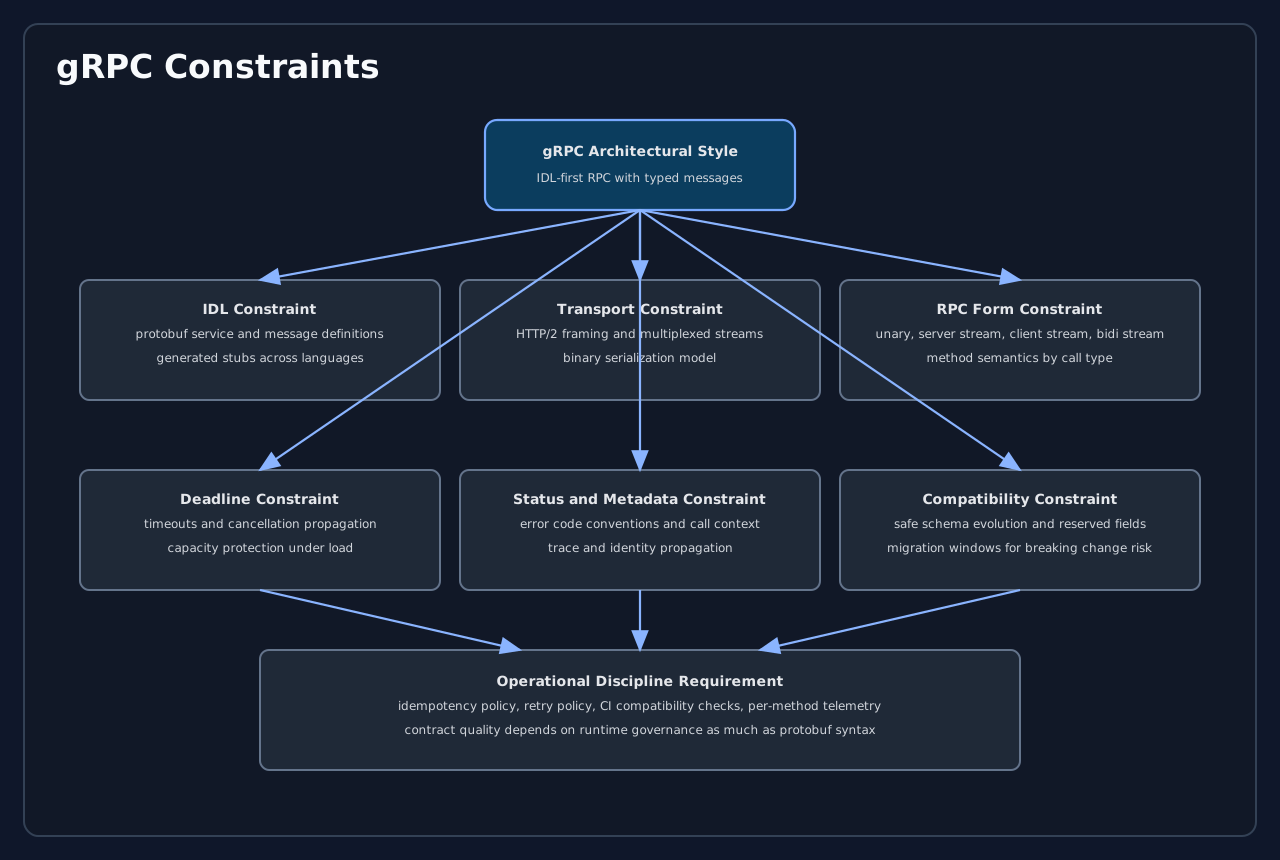
The map shows each constraint and the architecture pressure it introduces.
Goals of the gRPC Style
Performance Binary payloads and efficient framing reduce payload and parsing overhead.
Scalability HTTP/2 multiplexing and streaming support high fan-out service calls.
Simplicity Generated clients reduce hand-written integration code. Contract clarity improves onboarding.
Modifiability Protobuf evolution rules support additive change when teams follow compatibility discipline.
Visibility Interceptors and metadata conventions support structured tracing and policy enforcement.
Portability
One .proto contract can generate clients across many language stacks.
Reliability Deadlines, retries, status model, and idempotent method policy improve failure handling.
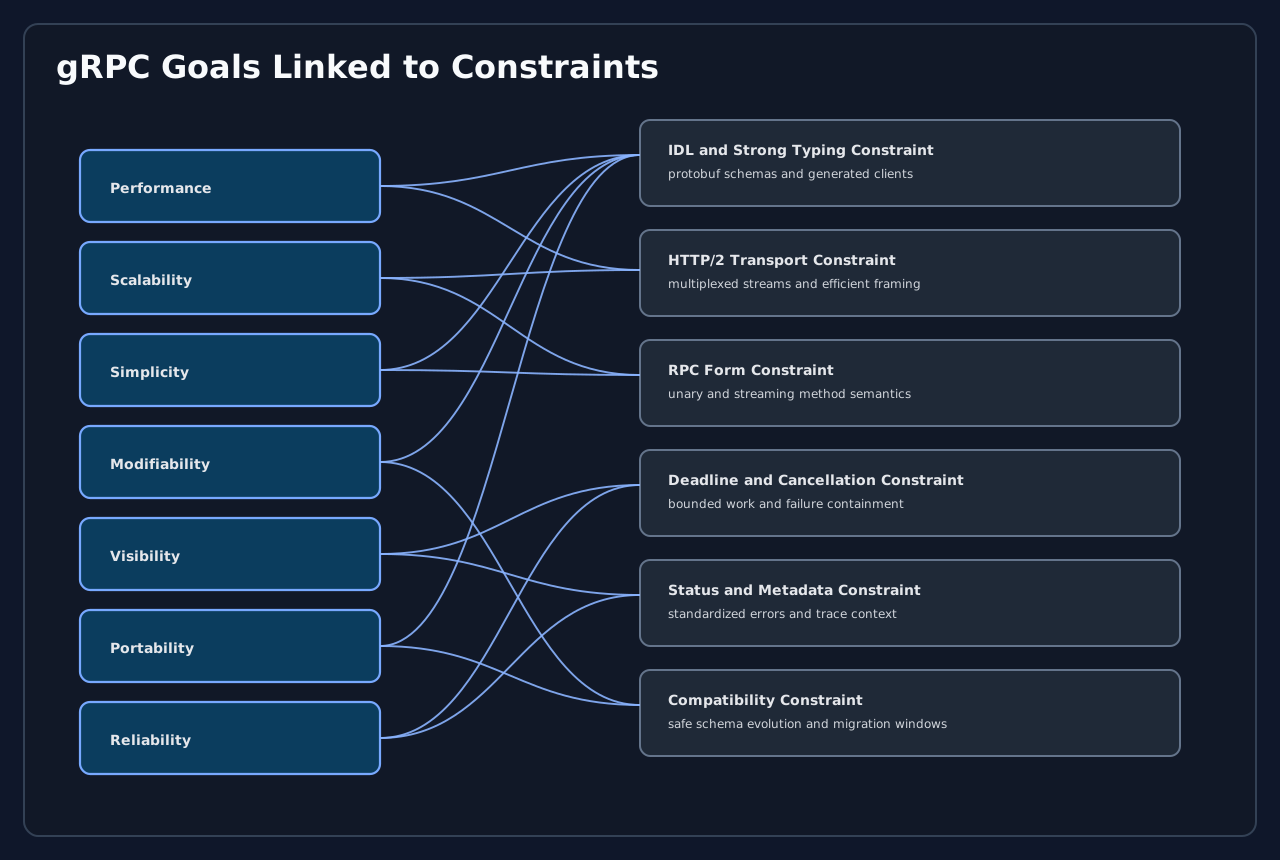
The diagram links goals to constraints that make those goals realistic in production.
How It Works
A practical implementation flow:
Step 1. Define service capabilities and method boundaries in domain language. Avoid one giant service with unrelated operations.
Step 2. Model requests and responses in protobuf messages. Document semantic meaning for each field.
Step 3. Define method call form. Use unary for bounded request-response. Use streaming for continuous or chunked interactions.
Step 4. Define status code policy and error details model. Keep error semantics stable across services.
Step 5. Define deadline and retry policy. Attach default budgets in clients. Enforce server-side timeout handling.
Step 6. Define metadata standards. Carry trace IDs, auth context, tenant identity, and idempotency keys.
Step 7. Implement service adapters with clean boundary separation. Transport handlers should delegate to domain use cases.
Step 8. Add compatibility checks in CI for .proto changes.
Reject breaking changes without migration plan.
Step 9. Add contract tests, latency tests, and failure injection tests. Validate timeout behavior, retry behavior, and streaming back-pressure.
Step 10. Monitor production signals. Track p95 and p99 latency, deadline exceeded rates, and per-method error distribution.
In the scenario, recommendation assembly can use unary calls for profile and price scoring. It can use server streaming for listing candidates when result sets are large. Each call carries deadline and correlation metadata.
Challenges and Shortcomings
gRPC has clear benefits and clear tradeoffs. Public browser integration is less direct than plain HTTP JSON APIs. Human-readability of binary payloads is lower in ad hoc debugging. Schema governance can become strict process overhead in fast-moving teams.
Common risks:
- oversized service definitions with weak domain boundaries
- missing deadlines and unbounded retries
- inconsistent status code usage across teams
- breaking protobuf changes pushed without migration windows
- streaming methods deployed without back-pressure controls
gRPC is a strong fit for internal service meshes and high-frequency calls. gRPC is a weaker fit for open public APIs that prioritize human inspection and simple curl-based integration. Architecture teams should choose gRPC where its constraints match the service interaction profile.
Link to Existing Handbook Concepts
| Concept | Why? |
|---|---|
| Introduction to Services | gRPC methods are service capabilities exposed through a published contract. |
| Service Contracts with REST | Both styles need explicit compatibility policy and stable error semantics. |
| Interaction Style Selection Framework | gRPC fit should be evaluated per capability and consumer profile. |
| Hexagonal Architecture | gRPC handlers are inbound adapters around core ports. |
| Onion Architecture | Transport and protobuf tooling stay in outer layers. Domain rules stay in inner layers. |
| Dependency Inversion | Contracts should isolate core logic from transport details. |
| Correctness and Testing | Compatibility and latency tests are mandatory for gRPC contract quality. |
Written by: Pedro Guzmán
See References for complete APA-style bibliographic entries used on this page.