Service Contracts with gRPC
Core Idea
Examples and diagrams in this page follow the shared Hypothetical Scenario.
A gRPC service contract is the public RPC boundary that defines callable methods, message schemas, metadata expectations, status behavior, and compatibility policy.
The contract lives in protobuf definitions and in the runtime rules that surround them.
Both parts matter.
A valid .proto file with weak runtime policy still creates integration failures.
Service orientation depends on contract discipline. A service should publish capability through a clear interface. A consumer should call that interface without dependence on private internals. gRPC provides a strong mechanism for this with generated clients, typed messages, and explicit service method signatures.
This page covers core contract elements, service capabilities, gRPC contract structure, comparison with non-gRPC contracts, and the role of reflection and dynamic routing in runtime binding.
Historical Context
Contract-first service design has roots in interface definition languages used long before modern cloud stacks. gRPC brought these ideas into mainstream service platforms through open tooling, HTTP/2 transport, and cross-language code generation. Teams that adopted gRPC at scale reported better contract consistency and stronger compatibility governance across large service portfolios.
Sources: Google Open Source (2015), IETF RFC 9113 (2022), and protobuf.dev (2024)
The Problem It Solves
Internal APIs often fail through contract drift. A method name stays the same yet payload fields change meaning. Timeout behavior differs by team. Error mapping differs by service. Client code adds custom wrappers to survive inconsistency. Maintenance cost grows.
Ad hoc RPC endpoints make this worse. Each team invents local conventions for request shape, error payload, and retry behavior. Cross-team integration review becomes expensive. Incident triage becomes slower.
A gRPC contract solves this by forcing shared structure. Method signatures are explicit. Message types are explicit. Status model is explicit. Compatibility rules are explicit. This structure reduces ambiguity at scale.
In the car intelligence and marketplace scenario, the recommendation coordinator calls pricing, reliability, and repair-cost services. These services need stable low-latency calls with predictable failure semantics. gRPC contracts support this profile through typed schemas and clear runtime policy.
Main Concept
Uniform Contract Elements for gRPC
A strong gRPC contract has consistent elements.
-
Service definition
serviceblocks define callable capabilities. Method names should reflect domain actions. -
Message schemas
messageblocks define request and response models with stable field numbering. -
RPC interaction form Unary and streaming method forms define expected communication shape.
-
Metadata conventions Headers carry trace IDs, auth context, tenant keys, and idempotency tokens.
-
Status and error details Status codes and structured error details define failure semantics.
-
Deadline and cancellation policy Timeout budgets and propagation rules are part of consumer and provider contract behavior.
-
Compatibility rules Field additions, reserved fields, and deprecation timelines define safe evolution.
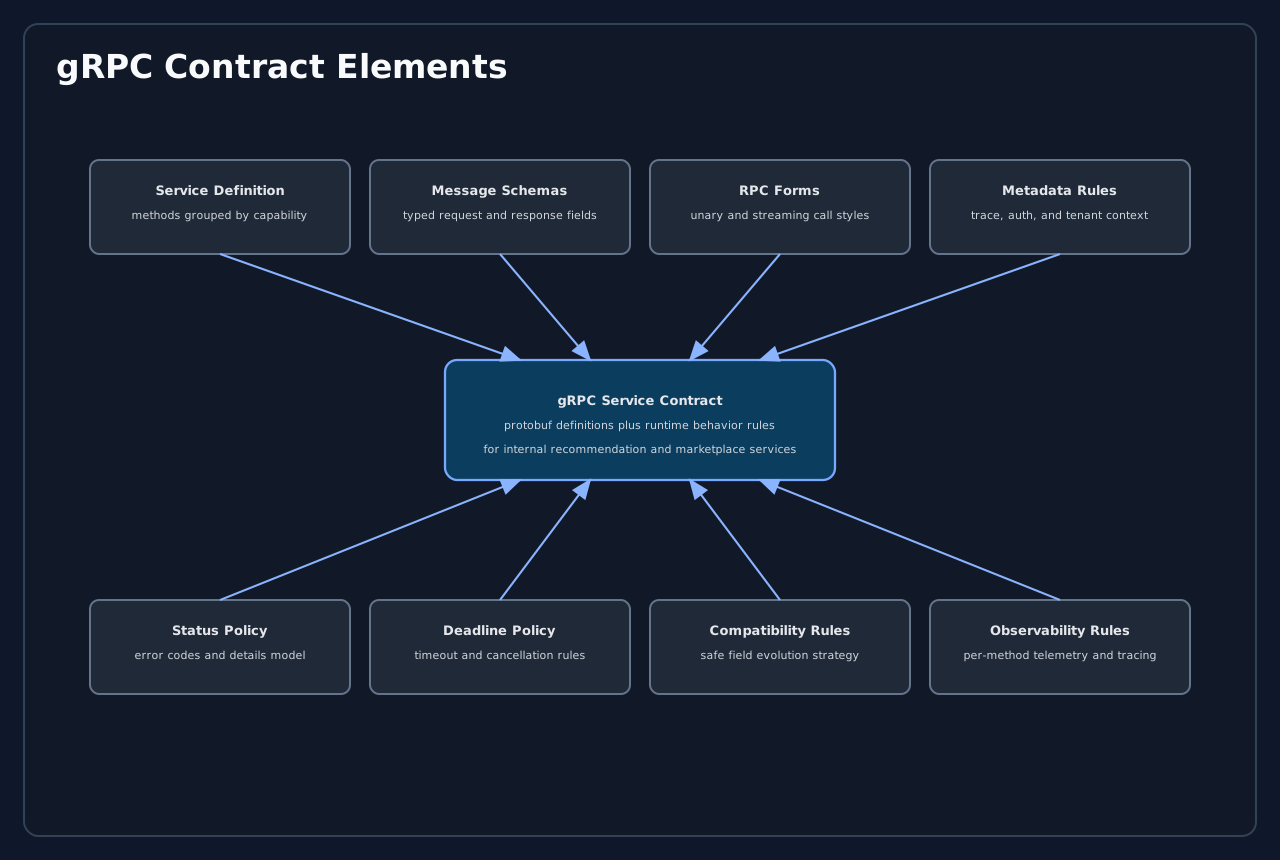
The diagram maps these elements to one coherent contract boundary.
gRPC Service Capabilities
A service capability is one callable method that delivers domain value. Method granularity should align with cohesive business actions. A single method should not hide unrelated responsibilities.
Scenario examples:
GetVehicleReliabilityProfileEstimateOwnershipCostScoreMarketDealGenerateMatchExplanation
These capabilities can belong to separate services with distinct ownership. Contract clarity improves governance and operational accountability.
gRPC Service Contracts
A complete gRPC contract includes:
.protoservice and message definitions- metadata and auth conventions
- status code mapping policy
- retry and idempotency policy
- timeout and cancellation rules
- compatibility lifecycle policy
- observability conventions for tracing and metrics
This full contract allows consistent integration across many teams and languages.
gRPC Contracts versus Non-gRPC Contracts
| Dimension | gRPC Contract | Ad hoc RPC Contract |
|---|---|---|
| Interface definition | Protobuf IDL | Per-team custom JSON or payload model |
| Client implementation | Generated stubs | Hand-written integration code |
| Error model | Standard gRPC status and details | Mixed local conventions |
| Evolution model | Proto compatibility rules | Unclear or undocumented |
| Runtime behavior | Deadlines and metadata conventions | Inconsistent timeout and context handling |
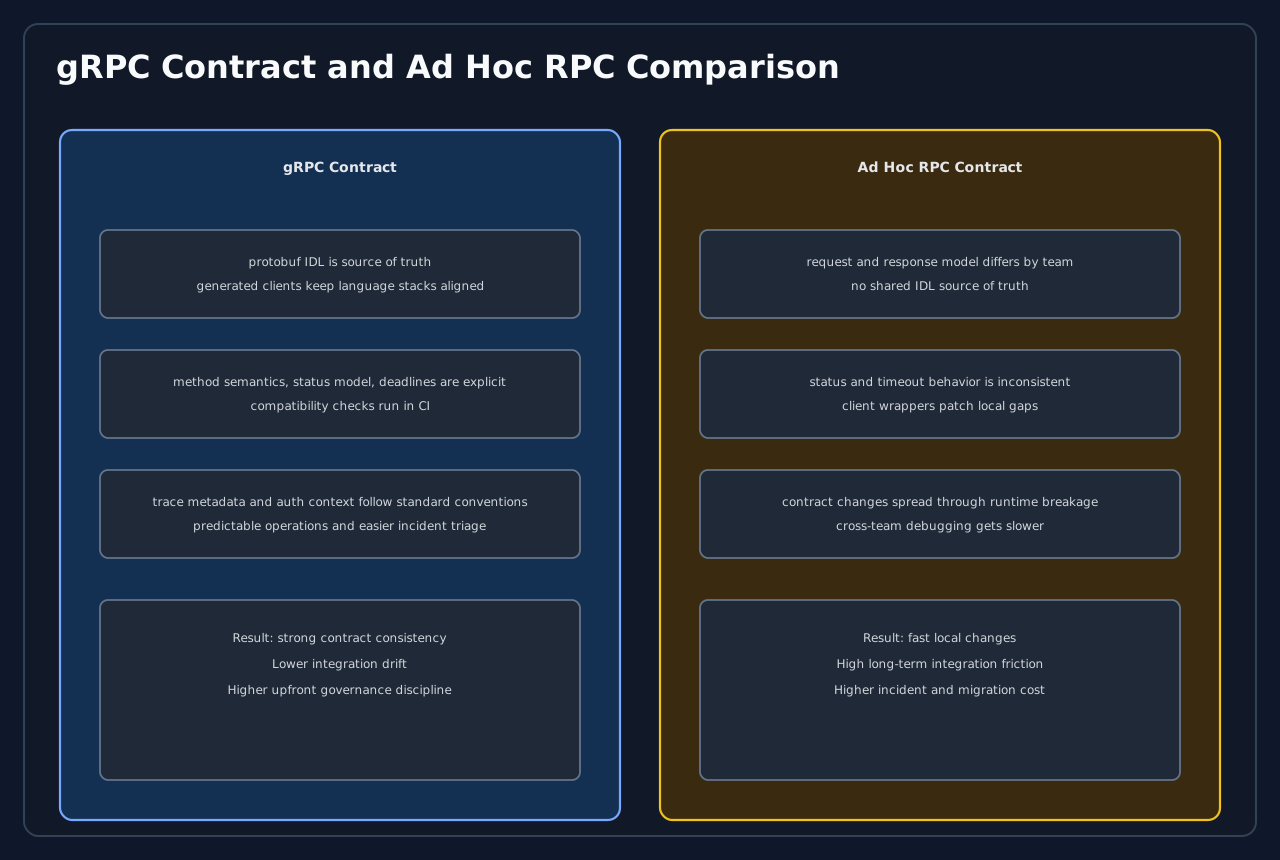
The diagram shows how typed IDL contracts reduce integration drift.
Reflection and Runtime Binding
gRPC supports server reflection in many deployments. Reflection can expose service metadata for tooling and diagnostics. Dynamic clients can bind method calls from discovered metadata.
In production systems, reflection often has environment-based controls. Some teams restrict reflection in internet-facing contexts. Internal platforms still gain value from reflection for debugging, test harnesses, and contract verification.
Runtime binding in gRPC can occur through service discovery and load balancing policies. The consumer binds to a logical service name. The platform resolves instances and routes calls. Contract consistency across instances remains mandatory.
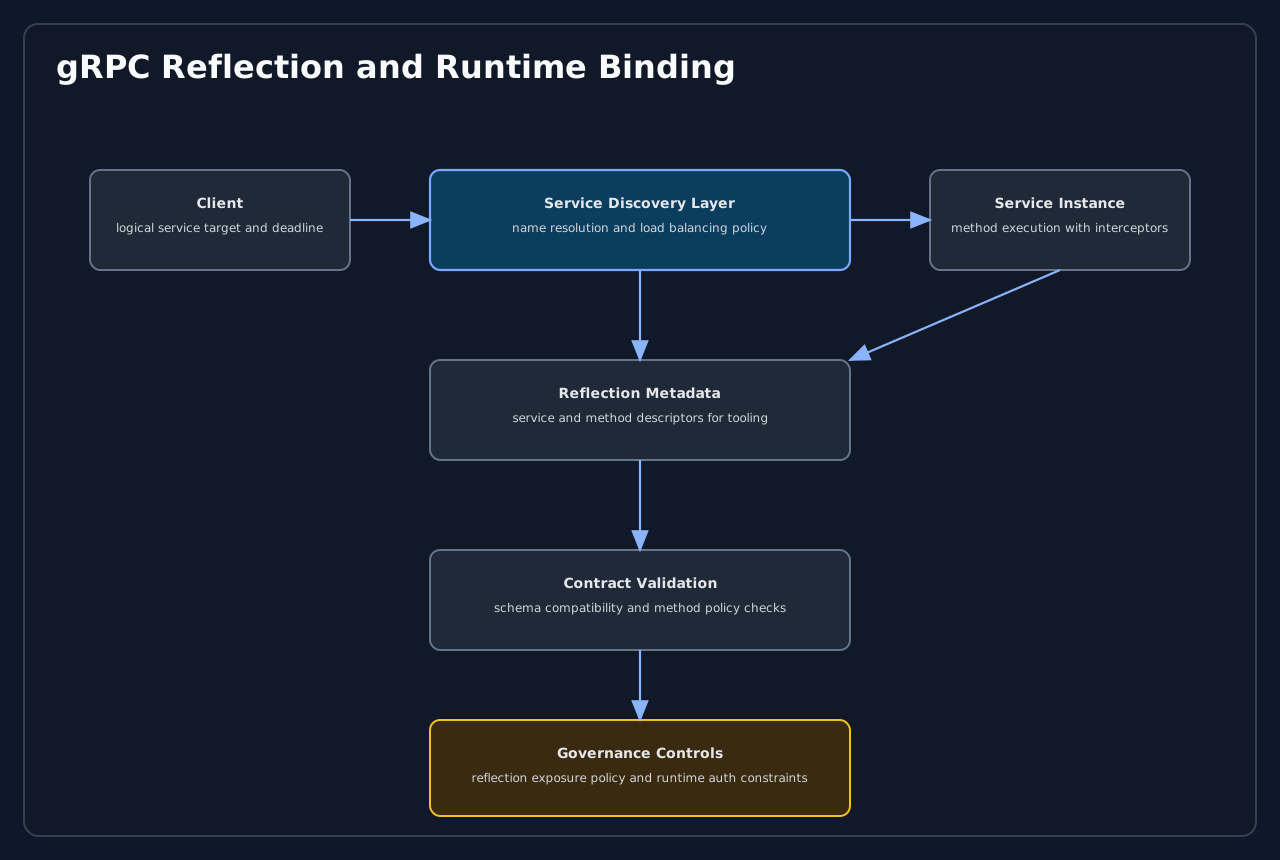
The diagram shows discovery, reflection metadata, and execution path under governance rules.
How It Works
A practical rollout path for gRPC contracts:
Step 1. Define domain capability boundaries and service ownership map.
Step 2. Write .proto contracts with explicit message semantics and comments.
Avoid vague field names.
Step 3. Define method interaction form. Use unary for bounded operations. Use streaming only when stream semantics are clear.
Step 4. Define metadata standards. Include trace propagation, identity, and idempotency keys.
Step 5. Define status and error details policy. Map domain error classes to stable status code patterns.
Step 6. Define deadline defaults. Set client budgets by capability criticality.
Step 7. Generate stubs and enforce version control on generated artifacts where needed.
Step 8. Add compatibility checks in CI for every .proto change.
Reject breaking changes without migration plan.
Step 9. Add contract and integration tests. Validate status mapping, metadata propagation, timeout behavior, and backward compatibility.
Step 10. Add production observability. Track per-method latency, status distribution, deadline exceeded rates, and retry volume.
Step 11. Govern deprecation lifecycle. Publish method and field retirement timelines. Track consumer migration before removal.
This process keeps contract quality high even as service count grows.
Challenges and Shortcomings
Strong gRPC contracts still need discipline. Fast feature teams can push contract changes with weak review. Streaming methods can hide complexity in flow control and failure handling. Generated stubs can create false confidence when semantic contracts are weak.
Common risk patterns:
- method names that leak transport details instead of domain meaning
- oversized request messages with mixed concerns
- inconsistent metadata handling across services
- retries on non-idempotent methods without safeguards
- weak compatibility governance during schema evolution
gRPC contract style fits internal service ecosystems that value type safety, performance, and strict integration consistency. It is less convenient for human-first public APIs where browser-native consumption and plain text debugging are top priorities. Architecture choices should match consumer profile and platform operating model.
Link to Existing Handbook Concepts
| Concept | Why? |
|---|---|
| Introduction to Services | gRPC methods are concrete service capabilities in a contract-first model. |
| gRPC Constraints and Goals | The contract model in this page operationalizes those constraints. |
| Service Contracts with REST | Both styles rely on precise contract semantics and compatibility governance. |
| Interaction Style Selection Framework | gRPC contracts should be selected from capability-level interaction needs. |
| Hexagonal Architecture | gRPC handlers and clients should remain adapters around core ports. |
| Dependency Injection | Transport dependencies should be injected at composition boundaries. |
| Correctness and Testing | Contract and compatibility tests protect gRPC service quality. |
Written by: Pedro Guzmán
See References for complete APA-style bibliographic entries used on this page.