Service Contracts with REST
Core Idea
Examples and diagrams in this page follow the shared Hypothetical Scenario.
A REST service contract is the public boundary of a service capability set. The contract defines resource identifiers, representation formats, method semantics, response codes, caching rules, and link relations. A consumer integrates with that boundary, not with private service internals.
Service orientation gains real value from this contract discipline. A service can evolve its internal model. Consumers stay stable when the contract remains consistent. The contract is not a single endpoint definition. The contract is the full interaction model across resources and transitions.
This page focuses on five areas.
- uniform contract elements
- REST service capabilities
- REST service contracts
- REST service contracts versus non-REST service contracts
- hypermedia and late binding in contract-driven systems
Historical Context
Roy Fielding defined REST constraints and uniform interface rules in 2000. Web API practice later brought practical resource naming, media type design, and link relation patterns. Thomas Erl and co-authors connected these foundations to service orientation governance in enterprise systems.
Sources: Fielding (2000), Richardson and Ruby (2007), Erl et al. (2012)
The Problem It Solves
Service ecosystems fail through weak contract design. One endpoint returns hidden side effects. Another endpoint uses custom verb names in URI paths. A third endpoint changes payload shape with no version policy.
These mismatches create hard coupling. Consumer code mirrors local quirks of each service. Platform teams lose shared interaction rules. Testing turns expensive and brittle. Integration work slows down across business programs.
REST contract discipline addresses this drift. It creates one interaction language around resources, representations, and transitions. Capability exposure then becomes predictable across service boundaries.
Main Concept
Uniform Contract Elements
A REST service contract has core elements. Each element contributes to boundary clarity.
-
Resource identifiers Resource URIs identify business resources, not remote procedure names. Example set in the car platform:
-
/profiles/{profile_id} /listings/{listing_id}-
/recommendation-briefs/{brief_id} -
Method semantics Methods carry stable interaction meaning.
GETreads representation.POSTcreates new subordinate resource or triggers command-style creation.PUTreplaces full representation state.PATCHapplies partial change.DELETEremoves resource state. -
Representation model Contract defines media type and field semantics. Representation should include domain meaning, not transport leaks.
-
Status and fault model Contract defines expected status ranges. Contract defines error representation with machine-readable fields.
-
Cache directives Contract states cacheability and invalidation hints through headers.
-
Link relations Representations can provide links for valid next transitions. Links express workflow affordances at runtime.
-
Version and compatibility policy Contract defines additive change rules and deprecation schedule.
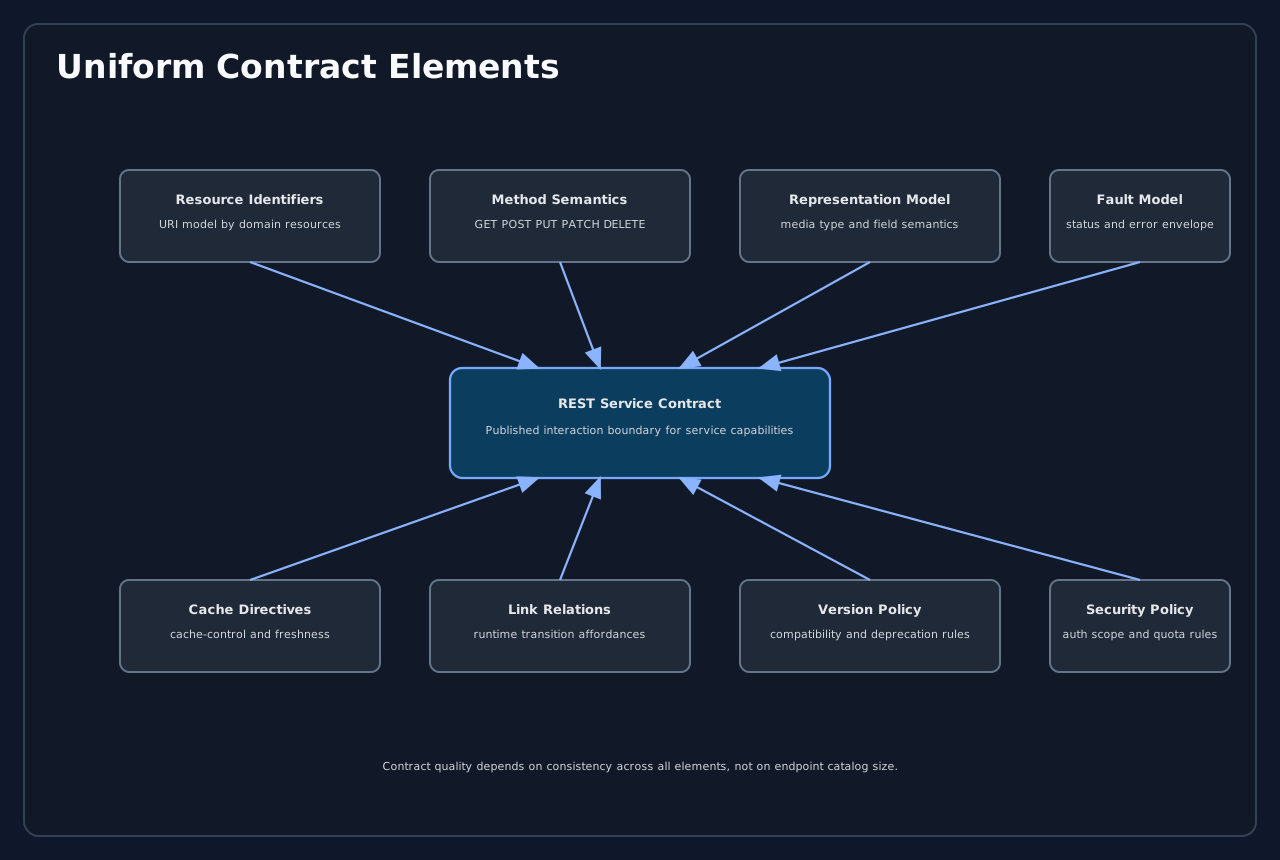
The diagram maps these elements into one contract model.
REST Service Capabilities
A service capability is a function offered through the service contract. In REST style, a capability is expressed through resource and representation interactions.
Example capability set for marketplace recommendations:
- create recommendation brief
- fetch recommendation brief status
- fetch candidate listing details
- reserve listing for checkout flow
Capability boundaries should follow domain roles. Capability boundaries should avoid unrelated method grouping. This design keeps contracts cohesive and easier to govern.
REST Service Contracts
A REST service contract is the full set of public interaction rules for a service. This includes:
- resource model
- method semantics
- representation schemas
- status and fault behavior
- link relation semantics
- caching behavior
- authentication and authorization policy
A contract can serve many consumers. Consumer diversity does not justify contract ambiguity. Contract precision supports consumer autonomy.
REST Service Contracts versus Non-REST Service Contracts
A non-REST contract often centers on operation endpoints. Names may look like remote function calls. State transition rules may be implicit. Resource semantics may be absent.
A REST contract centers on resource state and transitions. Method semantics remain consistent. Link semantics can expose valid workflow transitions. This model gives stronger portability across consumers.
| Dimension | REST Service Contract | Non-REST Service Contract |
|---|---|---|
| Interaction focus | Resource state and transitions | Procedure calls |
| Method meaning | Standard HTTP semantics | Service-specific meaning |
| Discoverability | Link-driven transitions possible | External docs required for next actions |
| Cache semantics | Native HTTP cache model | Custom cache rules common |
| Consumer portability | Higher with uniform interface | Lower with endpoint-specific conventions |
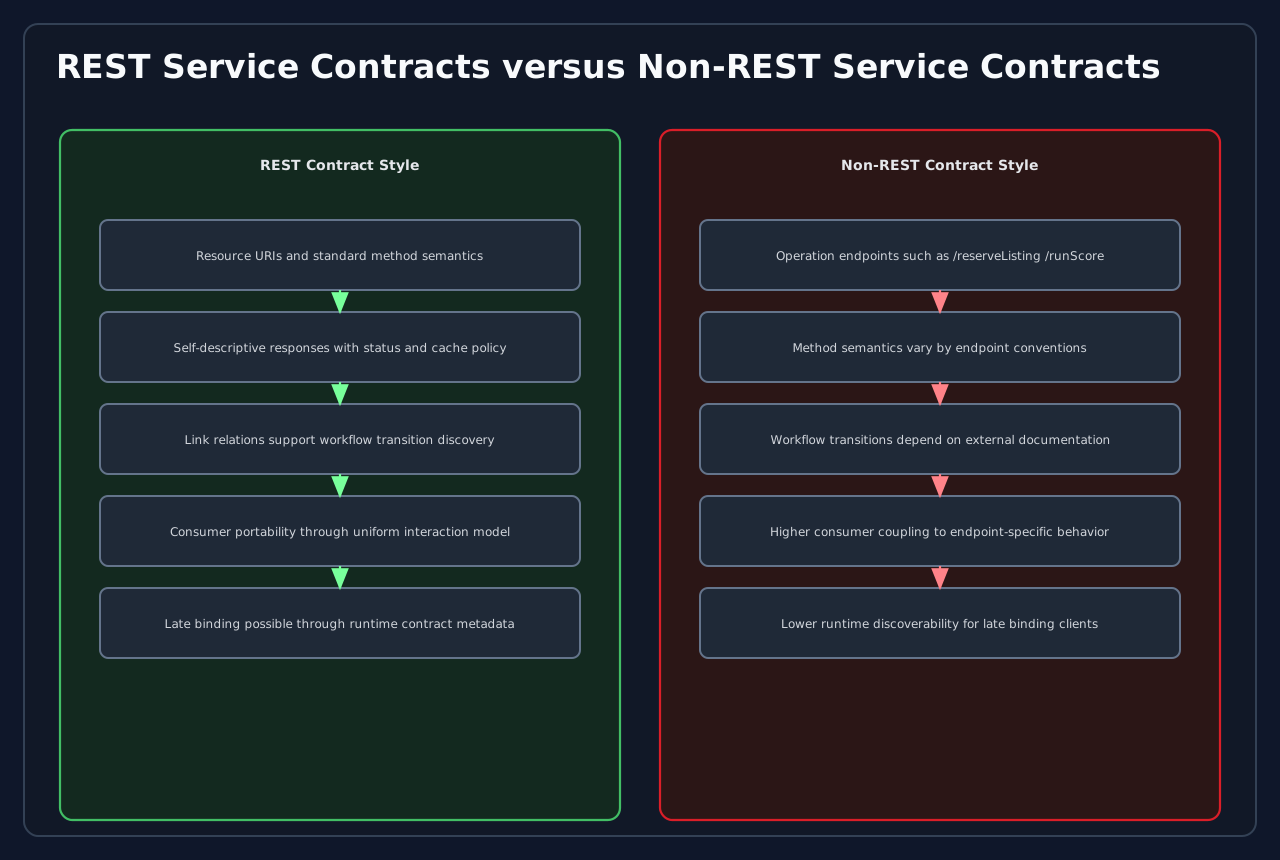
The diagram contrasts resource-driven contract style and operation-driven contract style.
Hypermedia and Late Binding
Hypermedia means representations can contain links to valid next actions. The client can follow links at runtime. This interaction model reduces hardcoded URI coupling.
Late binding means clients bind behavior at runtime through contract metadata. A client can discover transitions through link relations. A client can adapt to workflow evolution with less compile-time route coupling.
In the recommendation brief flow, a response can expose links such as:
selflistingsreservefeedback
A client follows links that are present. A client does not guess hidden route templates. This model strengthens contract resilience across controlled evolution.
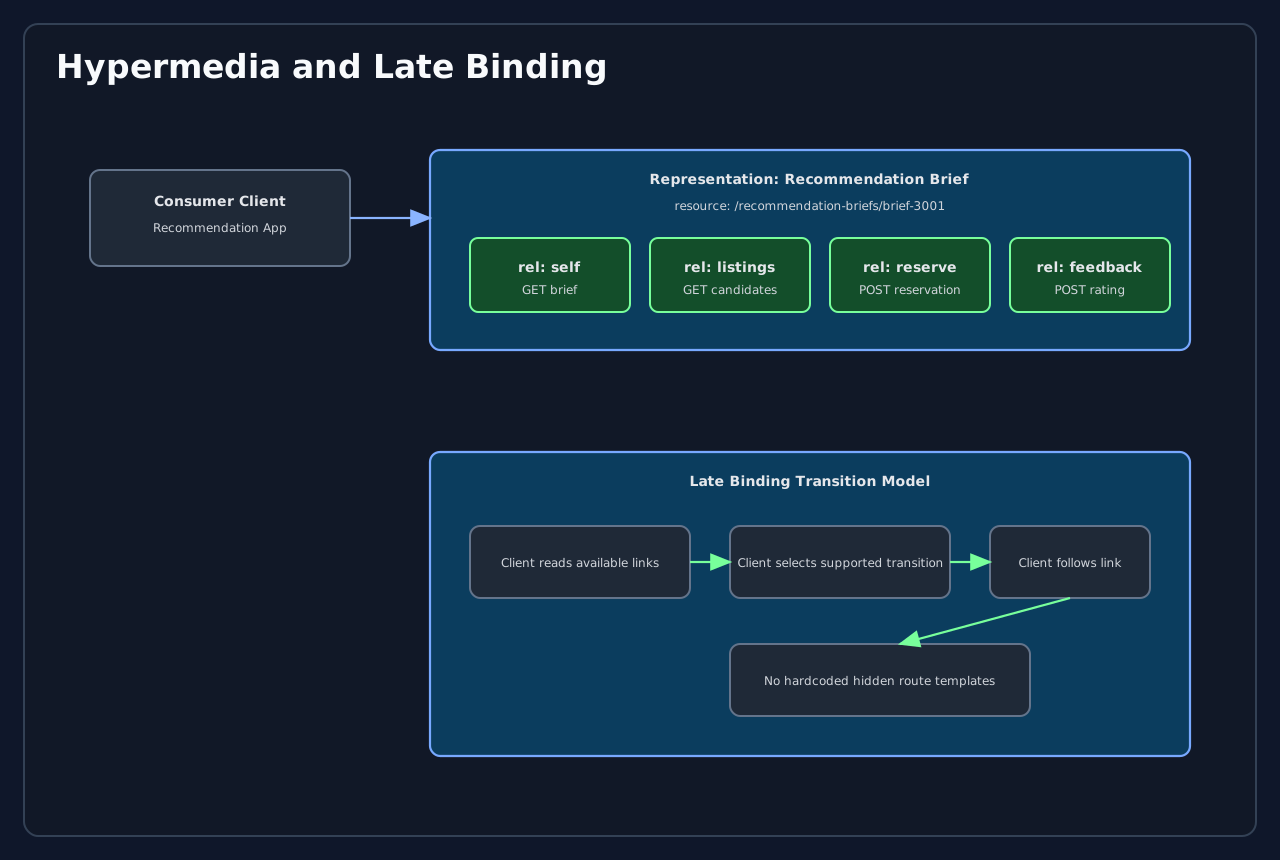
The diagram shows runtime transition discovery through link relations.
How It Works
A practical implementation flow can keep contract quality high.
Step 1. Define capability boundaries in domain language. Name resources from business concepts, not UI labels.
Step 2. Define resource model and canonical representations. State required fields, optional fields, and semantic constraints.
Step 3. Define method matrix per resource. Document allowed methods and response status model.
Step 4. Define fault model. Use stable error envelope shape with machine codes and remediation hints.
Step 5. Define cache policy. Mark read resources with cache directives where safe. Mark state-changing responses as non-cacheable.
Step 6. Define link relations for valid transitions. Expose links in representation payload where workflow discovery is useful.
Step 7. Add contract tests. Validate method semantics, status codes, cache headers, and link relation presence.
Step 8. Add governance checks. Run compatibility checks on schema changes and status behavior changes.
This flow supports service capability evolution with lower consumer break risk.
Challenges and Shortcomings
Strong REST contracts need governance discipline. Without governance, contract drift returns quickly.
Common challenges:
- overloading one resource with unrelated capability semantics
- weak method semantics that turn
POSTinto generic action tunnel - missing link relation policy in workflows that claim hypermedia
- cache policy errors that produce stale critical data
- low-quality error envelope design that hides remediation guidance
Hypermedia adoption can increase design effort. Client teams need shared understanding of link relation semantics. Documentation quality remains critical even with discoverable links.
Late binding reduces route coupling. Late binding does not remove need for version policy and compatibility testing.
Link to Existing Handbook Concepts
| Concept | Why? |
|---|---|
| Introduction to Services | Service contract and service capability definitions are refined through REST rules. |
| REST Constraints and Goals | Uniform interface constraints define the contract foundation. |
| Interaction Style Selection Framework | REST contracts should be chosen where resource semantics and compatibility goals align. |
| Hexagonal Architecture | REST contract handlers are inbound adapters around driving ports. |
| Interface Segregation Principle | Focused resource capabilities reduce client coupling. |
| Abstraction and Boundaries | Service contracts are explicit boundary abstractions. |
Written by: Pedro Guzmán
See References for complete APA-style bibliographic entries used on this page.